
Preparing furniture for storage between moves
Check furniture condition, packing and provider requirements before storage. Plan what stays accessible and what needs attention before return.
Before you start
Check the furniture’s condition and care requirements, agree its preparation and packing, and keep separate parts clearly identified. Keep the belongings you will need accessible and retain the records for return delivery.
Furniture going into storage needs preparation for both the journey and the time it will spend waiting. Check its condition, deal with loose components and choose packing around the actual piece. A damp cabinet or an unstable table needs attention before it disappears inside wrapping.
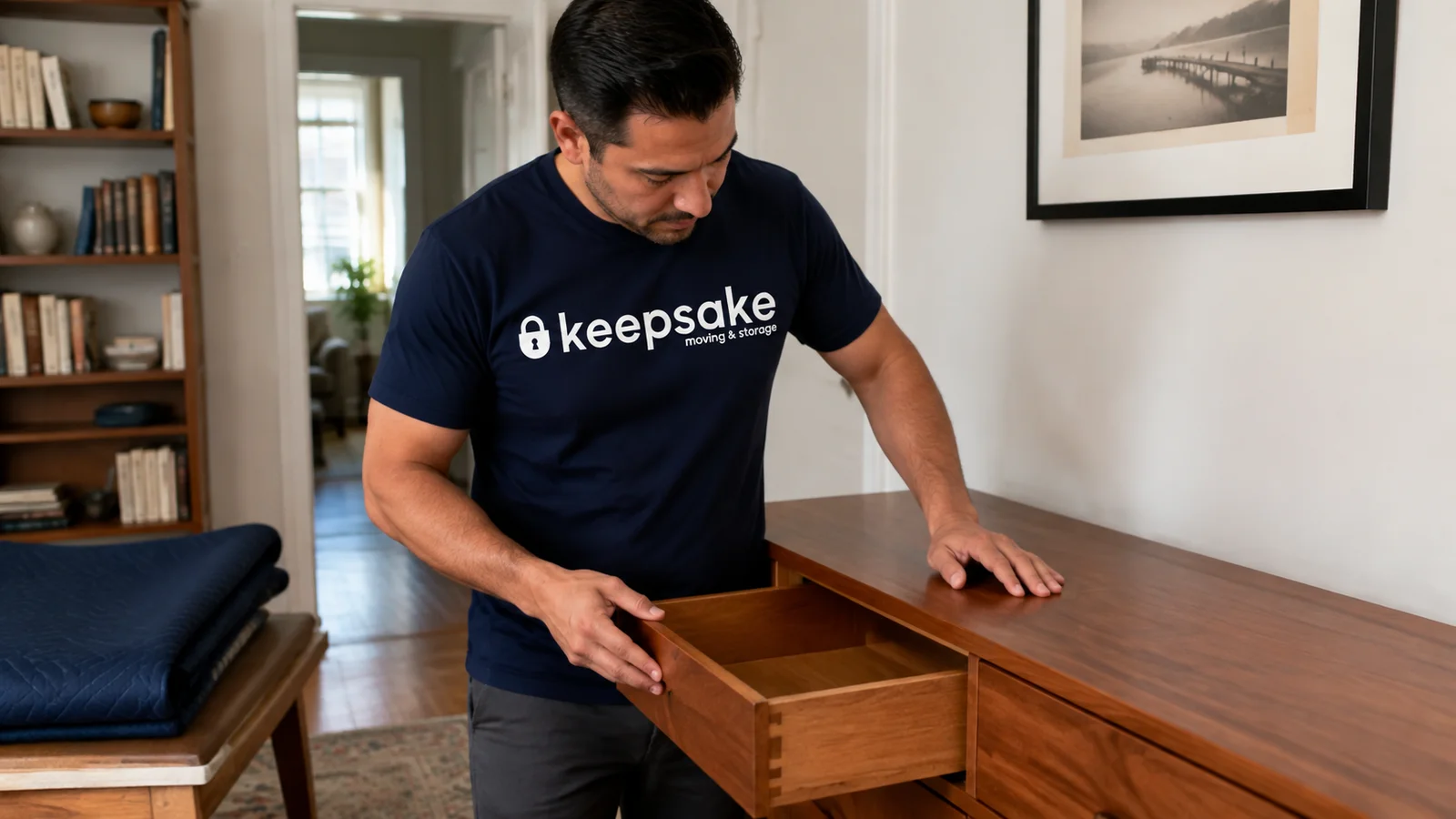
Start while you can still walk around the furniture and open every drawer. Take condition photographs, identify anything delicate and decide which contents need to remain accessible.
Check the condition before cleaning or wrapping
Look at the furniture in good light. Note loose joints, missing feet, damaged surfaces and anything that already needs repair. Photograph the whole piece and take closer pictures of existing marks, with enough surrounding detail to show where each mark is.
Follow the maker’s care instructions if you clean a piece before storage, and allow it to dry fully. Avoid trying a new cleaning product or applying a treatment just because the furniture is about to be put away. A recently repaired finish may also have care or curing instructions that need to follow it into storage.
Tell the moving team about dampness, instability or another unresolved condition problem before collection. An antique with a loose joint may need advice from an appropriate specialist before handling. Wrapping can protect a surface during transport; it does not repair the object underneath.
Check the conditions needed by sensitive pieces
Describe the materials and condition of antiques, leather furniture, delicate finishes and other pieces with specific care requirements. Ask the provider how the available storage conditions match those needs and whether any preparation is required before acceptance.
Unsuitable humidity and changes in humidity can affect materials including wood and finishes, as the Canadian Conservation Institute explains in its humidity guidance. For a sensitive piece, discuss the actual environmental requirements rather than relying on a broad description of a facility.
Artwork and pianos should be identified individually when arranging the move. Our artwork preparation guide covers the condition records and details that help with an assessment of art.
Empty and separate furniture deliberately
Decide what will remain inside furniture with the moving team before pickup. Heavy or loose drawer contents can change how a piece needs to be handled. Emptying also gives you a chance to find the documents, spare keys or work accessories you may need while everything else is stored.
Where disassembly is appropriate, follow the manufacturer’s instructions and agree who will do it. Photograph the assembled piece and any useful connection details. Label removed components so their relationship to the furniture remains clear after several months.
Keep hardware associated with its own item reference. A bag marked with the dining table’s identifier is easier to use than a collection of unidentified screws from three different rooms. Store assembly instructions with your accessible moving records, and note where the hardware travels on the inventory.
Agree packing around the piece and the storage period
Establish who will prepare each item and supply the agreed materials. Describe the expected storage period and any known additional handling, such as a later transfer to another property. Raise fragile surfaces, protruding parts and any orientation instructions before the furniture is wrapped.
Labels belong on packaging or a suitable attached tag, rather than directly on a delicate finish. The label should identify the item and any handling information agreed for it. Keep more detailed condition records in the inventory so they remain available without opening the package.
If you have already wrapped furniture yourself, describe or photograph the preparation for the provider. Packing that was convenient for a brief trip may need a different approach for the proposed storage arrangement. Resolve that before the collection day, while changes are still easy to make.
Keep the things you will need out of the stored load
Check drawers, shelves and desk compartments once more before they become inaccessible. Set aside the belongings you expect to use during the storage period, including work equipment and items for your temporary home.
For anything you may need to retrieve later, find out how that would work before collection. Record the relevant item or box reference and the agreed access arrangements. This is especially useful when only part of the load will return at first.
A storage inventory connects each piece with its photographs, separate parts and eventual destination. Keep a copy available throughout the storage period and update it when anything is removed or returned.
Prepare for the furniture’s return
Retain the assembly instructions, condition photographs and item references until everything is back in place. Before return delivery, check the route into the new property and decide which rooms will receive the furniture. A piece that fitted your previous apartment still needs an assessment against the new doors and turns.
Compare the returned items with your record, photograph any concern and follow the reporting process in your agreement. Keep relevant packaging and documents while a concern is being addressed.
Keepsake can arrange storage and the associated moving work. If your main difficulty is the gap between two handovers, our guide to moving between leases covers the dates, temporary accommodation and separate moving stages.
Common questions
How to keep furniture from molding in storage?
Check furniture for dampness before packing, allow any appropriate cleaning to dry fully and raise existing condition problems before collection. Discuss the piece’s materials and care needs with the storage provider, including the available conditions and packing requirements. Do not put a damp or affected piece into storage and expect wrapping to resolve the problem.
Can I leave belongings inside furniture during storage?
Agree the contents with the moving team before pickup. Loose or heavy items can affect how the furniture is handled. Remove belongings you will need during the storage period, and record any contents that remain with the piece on the inventory.
What should I keep for reassembling stored furniture?
Keep the assembly instructions, photographs of the connections and a record of each separate component. Label hardware with the furniture’s identifier and note where it is packed. Retain those records until return delivery and assembly are complete.