
Preparing artwork for a move
Record and assess artwork before a move, prepare ordinary framed pieces carefully and identify valuable or delicate work that needs individual advice.
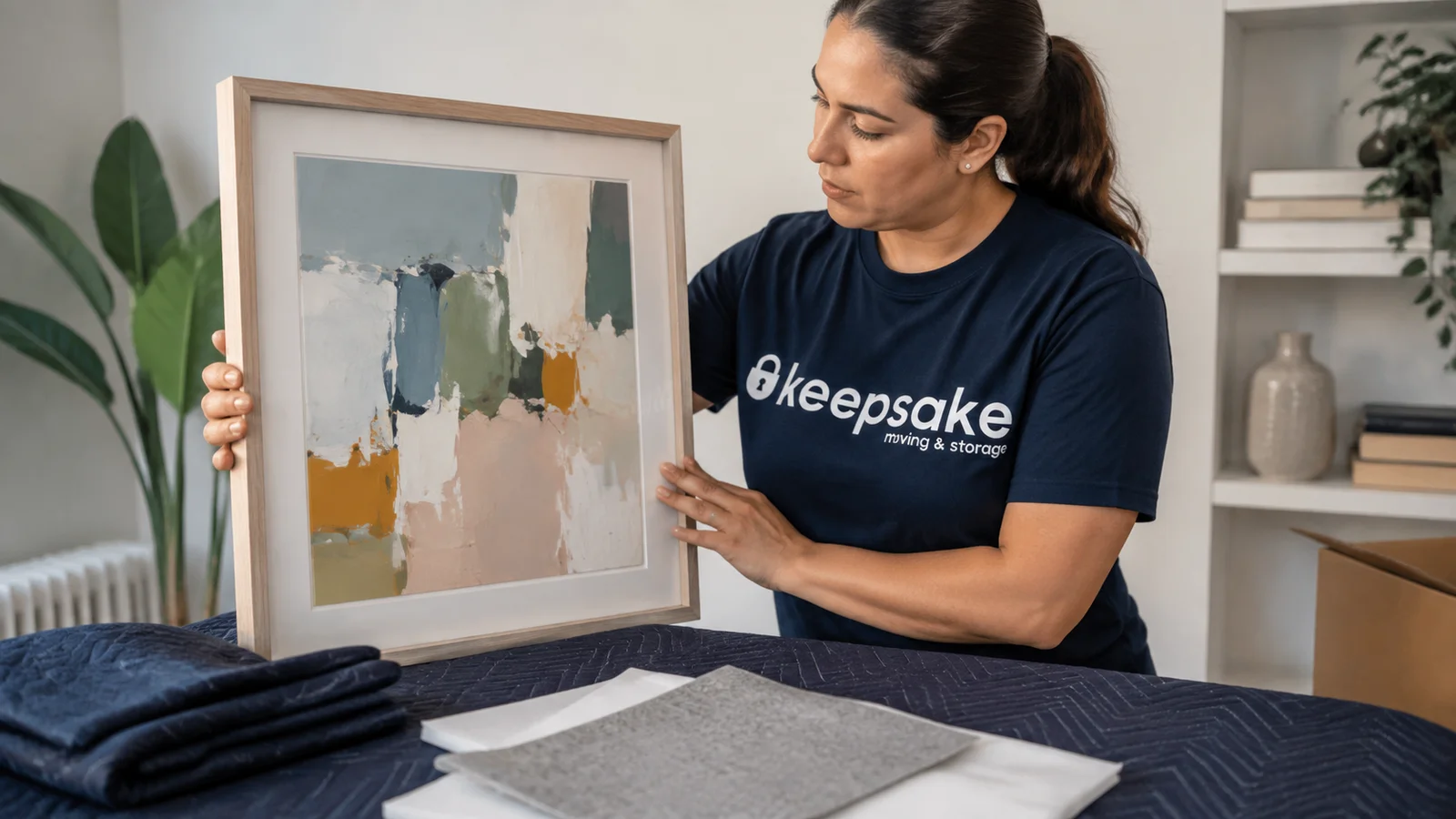
Before you start
Identify the type and condition of each artwork before choosing its packaging. Original paintings, unstable frames and works with delicate surfaces may need specialist advice; document each piece and agree its handling before moving day.
“Artwork” can mean a framed print, an original oil painting, a photograph behind glass or a piece made from several materials. Those objects do not all want the same wrapping. The first step is to identify what you have and its condition, rather than buy one roll of material and use it on everything.
Identify the object behind the frame
Make an entry for each piece with its dimensions, materials if known and current location. Note whether it is glazed, whether the surface is exposed and whether the frame has fragile decoration or loose components. A photograph is more useful than guessing at an unfamiliar material.
Distinguish the artwork from its frame. A frame may look substantial while holding a delicate work on paper, or it may itself be the most vulnerable part of the object. If you do not know how the work is secured, say so rather than dismantling it to find out.
The Canadian Conservation Institute treats paintings and works on paper as different care subjects. Its basic painting-care guidance is a useful starting point for understanding why the support, surface and framing affect handling decisions.
Record condition before anything is wrapped
Photograph the front, the frame and any safely visible back or attachment details. Take an overall view and closer photographs of existing marks, loose decoration or other concerns. Give the photographs the same reference as the inventory entry so they are easy to find later.
Do not clean the surface to improve the photograph or test whether a mark rubs off. If paint appears to be lifting, the frame is unstable or something is loose inside, stop and seek advice from a conservator or other suitable specialist before arranging ordinary transport.
A condition note does not need formal art terminology. “Small chip on the lower-left frame corner” is more useful than “good condition” when the photographs show what you mean. Keep purchase, appraisal or provenance records separately from the object and share only the information required for the move.
Decide which pieces need a specialist assessment
Raise concerns before moving day if a work is irreplaceable to you, unusually valuable, physically unstable or difficult to describe. Large size, exposed delicate surfaces and mixed materials can also make a generic packing approach unsuitable.
The Canadian Conservation Institute’s guidance on paintings recommends assessing stability before travel and selecting packing according to the work’s fragility, handling and journey.
Keepsake moves artwork through its specialty moving service. Share the photographs, dimensions and condition details so the team can assess suitable preparation and packing.
Agree who packs and who unwraps
For each piece, establish who will prepare it, supply the agreed packaging and handle any removal from the wall. The responsibilities may differ between a framed print and a work receiving specialist preparation.
Confirm whether the mover needs to inspect the object before it is packed. If you pack it yourself, provide an accurate description rather than only a sealed package marked “fragile.” Keep a record of the packing and any instructions supplied by the person who assessed it.
Include the receiving end when agreeing the work. Identify who will unwrap and place each piece, and arrange any wall hanging or installation you need.
Keep the packing record attached to the inventory
An artwork reference should follow the object through the move. Mark the outside packaging in a way that identifies it without putting labels or adhesive on the artwork itself. Record the intended room, handling instructions and who can answer questions.
If several pieces look similar once wrapped, photograph each finished package beside its reference. Avoid recording only “three pictures,” particularly if one is traveling to storage and the others are going directly to the new home.
Our moving and storage inventory guide provides a simple structure for tracking belongings across more than one destination. For artwork, extend it with the condition photographs and any specialist instructions rather than creating a disconnected second list.
Plan where the art waits before and after the move
Leave a suitable holding location available at each address and keep it out of the active carrying route. Tell the moving team where pieces should go while the rooms are being arranged, so they are not placed wherever the first space appears.
Do not stack other belongings against wrapped art or assume packaging makes an object suitable to lean anywhere. The permitted orientation and support depend on the piece and its packing. Follow the instructions agreed for it and keep the reference visible.
If the artwork will be stored, discuss the conditions and expected duration before booking. “Storage” by itself does not describe a suitable environment for a particular work. Use the object’s care requirements to ask concrete questions rather than relying on a general label such as climate-controlled.
Inspect and record the arrival
Compare each arrival with the inventory and keep the condition photographs available. If a package looks disturbed or damaged, record what you see and follow the agreed procedure for inspection and reporting. Avoid rushing to unwrap an unstable piece without the right person present.
Keep the packaging and documentation until any concerns have been addressed. Use the object and package references when reporting a concern so the moving team can identify it.
Before hanging anything, decide the final placement and arrange suitable installation. Art can wait while a room settles. Making it the first thing attached to the wall is rarely essential to spending the first night in the new home.
Common questions
How can I protect my artwork while moving?
Identify the medium, dimensions and condition before choosing packing. Photograph each piece and flag loose, fragile or valuable work for individual assessment. Agree suitable packing, handling and placement with the moving team; different surfaces and frames can require different preparation.
Should I clean a painting before packing it?
Avoid treating moving day as an opportunity to try a new cleaning method on artwork. If a piece has an unstable surface or needs treatment, obtain advice from an appropriate conservator before handling or packing it.
Does moving artwork include hanging it at the new home?
Settle hanging or installation separately when agreeing the job. Transport, unwrapping and placing a work in a room are different tasks from choosing fixings and attaching it to a wall. Provide details of any installation you want arranged.