
How to pack fragile things for a move
Prepare fragile belongings with suitable boxes, separation and cushioning, and know which pieces need an individual packing assessment.
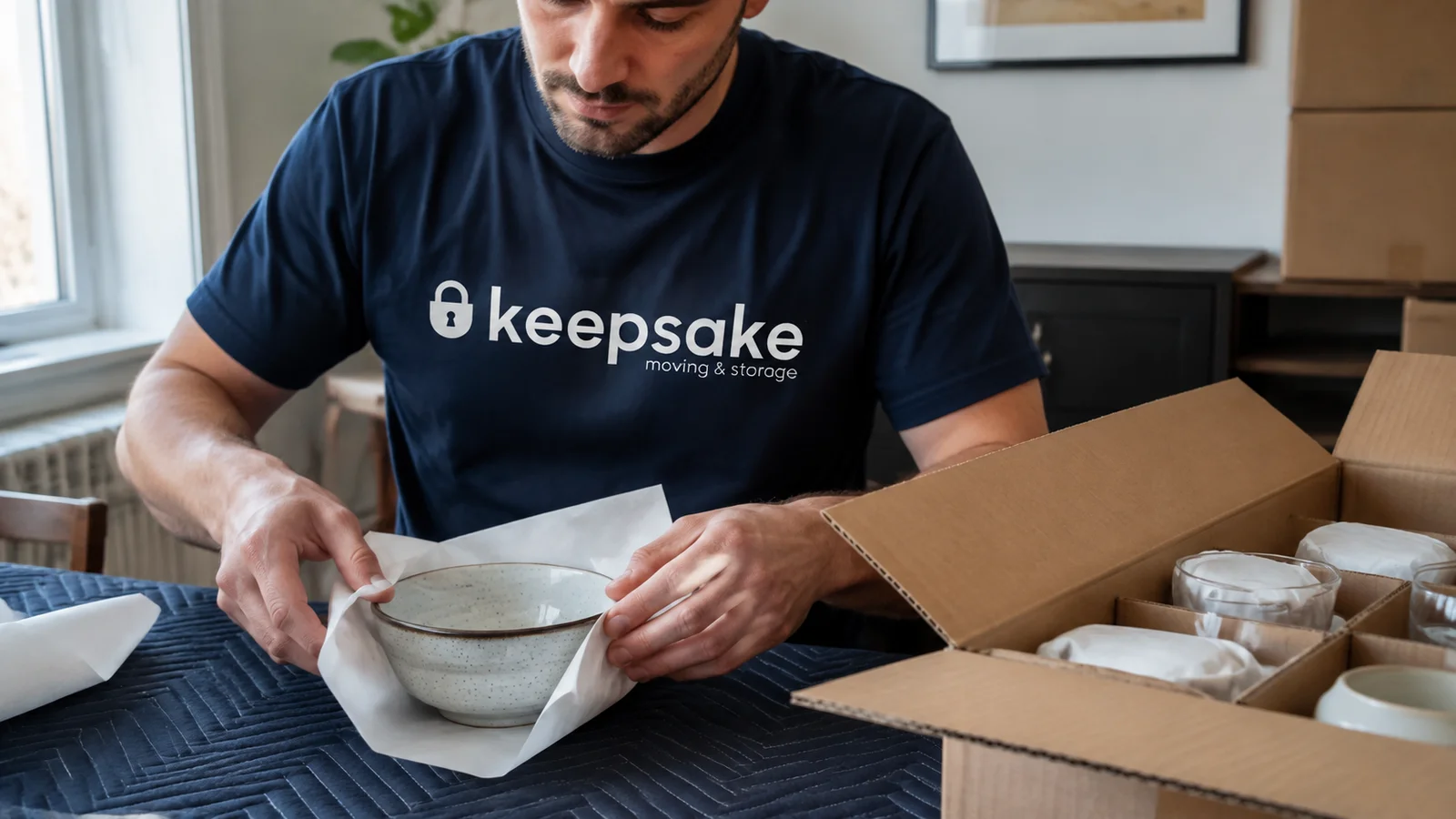
Before you start
Match the packing to the item's shape, condition and value before putting it in a box.
Fragile things need more than a warning written on the box. The packing has to separate hard surfaces, protect vulnerable parts and keep the contents from shifting into one another.
Before you start, decide which pieces you are comfortable preparing and which need an individual assessment. Our packing service can cover the delicate cupboards you would prefer to hand over, while specialty moving covers artwork, antiques, pianos and awkward pieces.
Look at what could be damaged
Consider the object’s shape and condition before choosing packaging. A sturdy ceramic bowl, a thin glass stem and a frame with loose joints present different problems.
Check for existing cracks, repairs, loose parts or surfaces that cannot tolerate direct contact. Photograph important pieces before packing, including details you would want to remember later. This is a useful record, not a substitute for suitable preparation or agreed protection.
Do not experiment with a valuable or delicate piece because a general packing guide seems close enough. Show the object and explain what you know about it. If you are unsure about its material or condition, say so.
Choose protection before choosing the smallest box
Use a sound container with room for suitable protection around the contents. A box that barely fits the bare item may leave no space to cushion it.
Keep separate pieces from touching directly. Wrap ordinary breakable items individually, protect vulnerable projections and fill gaps that would allow movement. The outside of one wrapped object should not become a hard pressure point against another.
These principles also appear in UPS’s packaging guidance: items need suitable cushioning and separation, with packaging matched to the contents. A household move still needs an item-specific decision, especially for objects that do not fit an ordinary box.
Avoid relying on a thin layer of clothing or loose material simply because it is nearby. The question is whether the item will remain supported when the box is handled, rather than how soft the material feels on a table.
Keep weight and shape compatible
Do not combine a delicate object with heavy items that could press against it. Give unusually shaped pieces their own assessment instead of wedging them between whatever remains on the shelf.
Make sure the box closes without force. Bulging sides or a lid held shut under pressure are signs to reconsider the arrangement. A closed box should not contain an object that is already being squeezed.
If the container becomes difficult to handle comfortably, split the load. Do not assume writing “heavy” solves the packing decision. Labels communicate; they cannot improve the strength of a box.
Keep tape and wrapping away from sensitive surfaces
Tape should secure packaging, not stick directly to an item’s finish. Some surfaces and materials can be marked by adhesives or by inappropriate wrapping. Artwork, gilded frames, polished finishes and objects with delicate decoration need particular care.
For artwork, use our preparation guide to gather the information needed for a packing discussion. Avoid putting a general wrapping material directly against an exposed painted surface without appropriate advice.
Take removable parts off only when the item’s design allows and you know how to do it safely. Keep those parts identified. Do not dismantle an antique or fragile fitting merely to make it fit the box you have.
Make the label useful to the person handling it
Mark the destination room and a brief contents description, along with any handling information the mover needs. Identify fragile contents clearly on visible sides of the box.
Tell the crew about anything unusual instead of relying entirely on the label. A box containing a delicate object that must remain in a specific orientation is a conversation as well as a marking.
If someone else packed the item, explain that too. Keep any instructions or packaging information provided by a manufacturer or specialist available rather than sealing them inside another box.
Plan the destination before opening everything
Choose a stable, clear surface for unpacking. Keep wrapping materials together until you have checked that small parts have not been folded inside them. Unwrap one item at a time, away from the route where furniture is still being carried.
If a piece appears damaged, preserve the relevant packaging and record its condition. Follow the mover’s agreed reporting process; Keepsake’s contact and claims information is in the terms. Avoid attempting a repair before discussing what happened.
For everyday kitchen contents, the kitchen-packing guide helps put this care into a workable order. The important decision is to match the preparation to the object while there is still time to do it properly.
Common questions
What are the best packing supplies for fragile items?
Choose supplies for the item's material, shape, condition and weight. A sound box, suitable cushioning and separation between pieces matter more than a universal shopping list. Leave space for protection and prevent movement inside the container. Valuable, unusually shaped or delicate objects need an individual assessment before you decide which materials should touch them.
Does writing fragile on a box protect it enough?
The label tells people about the contents, but the packing still needs to support them. Items should not press against one another or move freely inside the box. Mark the destination and handling information clearly, then tell the crew about anything unusual. A label cannot compensate for a weak container or unsuitable packing.
Should I unpack a damaged item immediately?
Record what you can see, retain the relevant packaging and contact the mover using the agreed reporting process. Avoid handling broken or unstable pieces in a way that could cause injury or further damage, and do not attempt a repair before discussing the issue. Keepsake's contact and claims information is available in the site's terms.