
What belongs in your first-night moving box
Pack the things you will need on your first night and morning, from bedding and chargers to the documents that should travel with you.
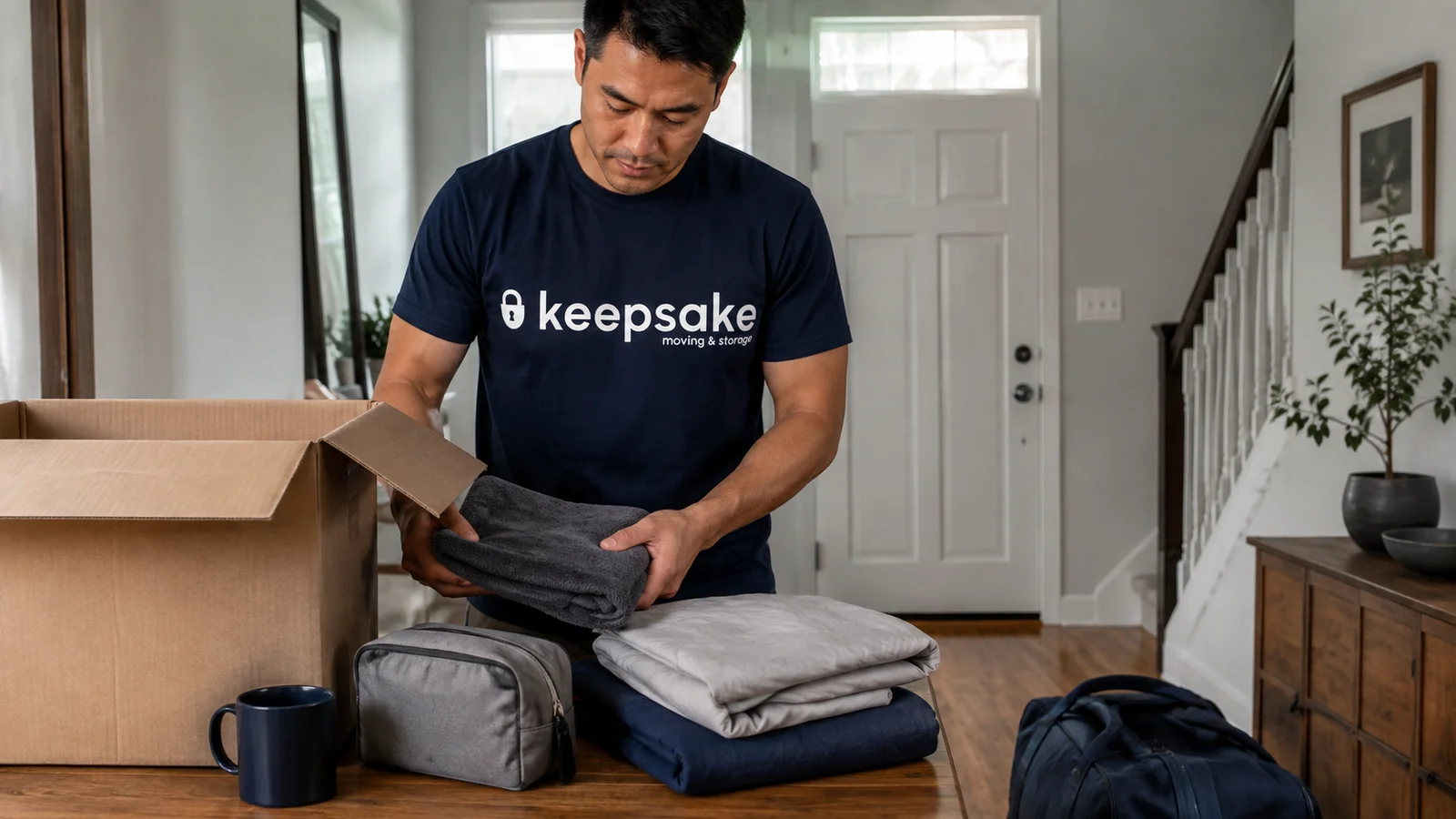
Before you start
Pack for the first evening and next morning, while keeping documents, medicines and valuables with you.
The first-night box is for the ordinary things you will want before you have the energy to unpack a home. It is much easier to make one while you can still find the towels.
Start with the evening you expect to have, then work forward to the next morning. This guide covers that short stretch. For the broader household move, our residential moving page explains the help you can arrange.
Separate personal essentials from household essentials
Keep keys, identification, payment cards, necessary documents, medicines and valuables under your own control. Put them in a personal bag that does not become part of the moving load.
Keep that bag in an agreed place while packing continues, and tell anyone helping you that it is staying with you. A bag left beside sealed boxes can easily look as though it belongs with them.
The household essentials box is different. It might hold bedding, towels and the things needed to get the kitchen working. Decide with the mover where it belongs in the plan, and make it clearly identifiable. Do not assume that a label alone guarantees when a particular box will be available.
Walk through the first evening
Imagine arriving at the new address after the furniture has been brought in. Think through what you will actually do before bed.
You may want to wash your hands, charge a phone, eat something, take a shower and make a bed. Gather the items that enable those jobs. Include the things that are easy to overlook because they normally live permanently in a drawer, such as a charging cable or a clean hand towel.
A practical household box might include:
- Bedding for the first night, with the matching pillowcases together.
- Towels, toilet paper and ordinary toiletries.
- Cups, basic utensils and whatever you need for the food you have planned.
- A small amount of suitable cleaning material, with liquids kept separate and secure.
- Bags for the packaging and everyday waste you will produce while settling in.
Adjust this to your home. You do not need a recommended product for every line, and you do not need to buy a second version of something already in the kitchen.
Include the next morning
Check what the first full day at the new address requires. Work clothes, school belongings, a laptop or breakfast equipment may need to be available before the rest of the household is unpacked.
Keep a change of clothes with your personal bag. If you have an early start, prepare the complete set, including shoes and any item that normally waits by the front door.
For a home office, make sure the equipment you need is part of a separate plan. A laptop without its charger is a fairly effective invitation to take the morning off, but it may not be one you can accept.
Let each household member contribute
Ask the people moving with you what they will want during that first evening. A child’s familiar bedtime item or a partner’s work bag may be more useful than another general household supply.
Give children a manageable personal bag if that suits their age, with an adult checking what is inside. Keep pet supplies accessible too, including the everyday equipment needed on arrival. The guide to moving with pets covers their day separately.
If someone has specific health or accessibility needs, plan those directly with them. Keep necessary supplies available and follow any required storage or handling instructions. A generic moving checklist cannot decide what is essential for another person.
Pack for the time your belongings will be apart from you
A short local move and an interstate move may require different personal supplies. Confirm the delivery arrangements before deciding how many days of essentials to carry.
If your belongings are going into storage, the first-night box may need to become a bag for the full gap between homes. Keep anything you will need during that period out of the stored inventory.
Our guide to moving between leases helps separate the belongings you can put away from the ones that need to remain with you.
Keep the box easy to recognize
Use a clear label describing its purpose and contents. If several people are packing, show them which box is the essentials box so it does not acquire a layer of ornaments or spare shoes.
Keep sharp tools, fragile items and liquids appropriately protected and separated. Avoid turning the box into an overfilled collection of whatever was left on the counter. If it needs to be divided, use clear labels for each part.
At the destination, place essentials somewhere accessible while the home is being arranged. You should be able to use the bathroom and make a bed without first moving a stack of boxes.
Once the evening is working, follow a practical unpacking order. The rest of the rooms can become a home at a pace that leaves you time to sleep.
Common questions
What should I pack in my moving day essentials box?
Work through the first evening and next morning: bedding, towels, basic toiletries, simple kitchen items and anything needed for work or school. Adjust the contents to your household and the time before the rest of the load is available. Keep documents, medicines, valuables and other essential personal belongings with you rather than relying on a box in the load.
Should my essentials box go on the moving truck?
Keep anything you cannot be without under your own control. For ordinary household essentials, agree with the mover how the box will fit into the delivery plan and label it clearly. Do not assume a marked box will be available at a particular moment unless that arrangement has been discussed, especially when storage or a longer journey is involved.
What changes if my belongings go into storage?
Pack personal supplies for the period you expect to be apart from the stored load, rather than only the first night. Include work equipment and household care items you will need during the gap. Ask about actual access arrangements before storing something you might want back; retrieval should not be assumed to work like opening a cupboard.