
How to check a moving company in NYC
Verify a New York mover’s registration, identify who will handle the move, and compare written answers before paying a deposit or choosing a company.
Before you start
Match the company on your quote to the relevant government registration, then check who will perform the move and what the written agreement covers.
A moving company can have a polished website and still leave basic questions unanswered. Before you decide, find out which business you are hiring, whether it is authorized for your move and what it is agreeing to do.
Reviews and recommendations are useful starting points. The checks below help you connect that reputation to the company named on the actual quote.
Check the registration for your type of move
A move entirely within New York State and a move across a state line fall under different oversight. Begin with the route rather than whichever registration number is largest on the advertisement.
For an in-state move, New York’s Department of Transportation advises checking that the mover is licensed by the state. Have the exact company name and NYSDOT number available when verifying it. The department publishes contact details and a consumer checklist on its household moving information page.
For an interstate move, use FMCSA’s mover search. Match the name and number to the company you are considering and review the record relevant to household-goods moving. Finding a USDOT number somewhere on a website is not the same as checking the business and its role.
Keep a copy or note of the record you checked. If the quote arrives under a different name, ask about the relationship before signing. A trading name may have an explanation; an unexplained mismatch needs one.
Find out who will actually move your belongings
Ask whether you are speaking to the carrier that will perform the move or a broker arranging it. A broker and a moving company have different roles. FMCSA explains the distinction and provides information about checking both in its consumer FAQs.
This is particularly important if a sales call uses one business name while the documents mention another. Write down the carrier’s name, who takes your payment and who answers questions after booking.
Useful questions include:
- Which company is responsible for pickup and delivery?
- Will another company be involved, and how will I be told who it is?
- Who should I contact if the dates or inventory change?
- Who receives a damage claim or a complaint?
- Which business name will appear on the agreement and receipt?
The point is to understand the arrangement. Do not assume a particular operating model guarantees good or bad service by itself.
Give each mover the same description
A comparison is only useful if the companies are quoting the same job. Send the same inventory, addresses, access information and packing request to each. Include belongings in storage areas and any extra pickup.
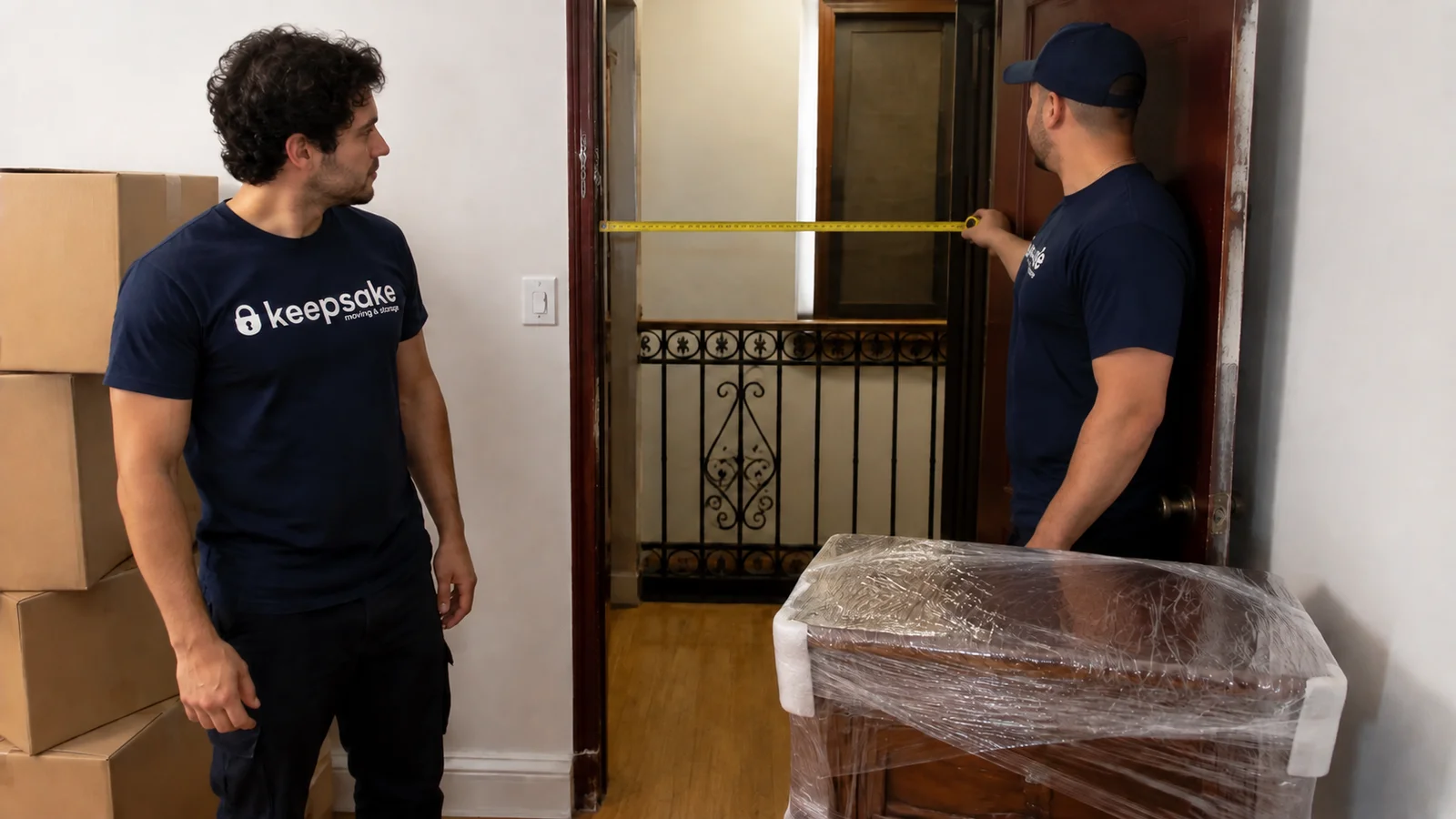
If you are unsure whether a large piece can get through the doorway, show that question before booking. Ask how the mover will review the contents and access. A conversation about the actual home tells you more than a price based only on “one-bedroom apartment.”
When the quotes arrive, compare the services and assumptions as well as the amount. The companion guide to reading moving quotes has a document-by-document checklist so you can keep this stage focused.
Read reviews for the work you need
Look for reviews that explain what happened, including the type of job and how a problem was handled. A comment about a single furniture delivery may be helpful, but it answers fewer questions about a whole-home interstate move.
Read more than the first screen of praise. Check dates, the business identity and whether the reviews describe an identifiable experience. Consider the company’s responses to criticism: a response that addresses the issue can be more informative than one that simply attacks the reviewer.
Treat the pattern as context, not proof that your move will have the same result. You cannot verify a company’s licensing, insurance terms or promised delivery arrangement from a star rating.
Ask about the parts that matter to your move
Choose questions tied to your circumstances rather than sending a generic interrogation.
| Your situation | A useful question |
|---|---|
| A narrow stairwell or large piece | How will you assess whether this item can be moved through the property? |
| A building with written insurance requirements | Can you meet these requirements and coordinate the documents with management? |
| Part of the packing unfinished | Which contents are you packing, what supplies are included and when will it happen? |
| A move between states | What pickup and delivery timing is being agreed, and who performs each stage? |
| A gap between homes | What storage arrangement and return work are included? |
Keep useful answers with the quote. If a promise matters to your decision, ask for it to appear in the agreement rather than relying on memory of the call.
Review payment and cancellation terms before paying
Find the amount due to book, the payment methods accepted and when the balance is due. Read the cancellation and rescheduling terms while there is still time to choose another arrangement.
Ask what happens if the inventory changes, a building delays access or the requested date is no longer workable. A written answer is easier to compare than reassurance that it will all be fine.
FMCSA warns interstate customers about signs of moving fraud, including demands for cash or a large deposit before the move, missing written estimates and requests to sign blank documents. Those signs merit further checks before handing over money. Read FMCSA’s moving-fraud guidance.
Keep one booking record
Save the final quote, inventory, terms, contact details and payment receipt together. Add the building’s approval and COI information when relevant. A short email confirming the agreed date and outstanding tasks is easier to use later than a chain of disconnected messages.
You can apply these checks to Keepsake too. Our license page provides the registration details, and our team can discuss the actual scope of a local move before you choose whether to book. The goal is to make a decision you can explain from the evidence in front of you.
Common questions
Does a USDOT number cover a move entirely within New York?
Do not use a USDOT number as a substitute for checking state authorization. For a move entirely within New York, verify the mover through NYSDOT’s household-moving guidance. For an interstate move, check the federal household-goods record as well. Match the exact business name to your quote so you know which company the registration belongs to.
Why does my quote show a different company name?
Ask the company to explain the relationship in writing. It could involve a trading name, broker or a separate carrier, but you should not have to guess. Identify who will perform the work, accept payment and handle questions or claims. If those answers remain unclear, resolve the identity before signing or transferring money.
Should I rule out a mover with only a few reviews?
A limited review history gives you less customer evidence, but it does not settle the decision by itself. Check the relevant registrations, the business identity and the written agreement. Ask detailed questions about your actual move and judge how clearly they are answered. Avoid treating either a small review count or a high star rating as a complete assessment.