Park Slope movers for the high stoops and the 4th Avenue elevators

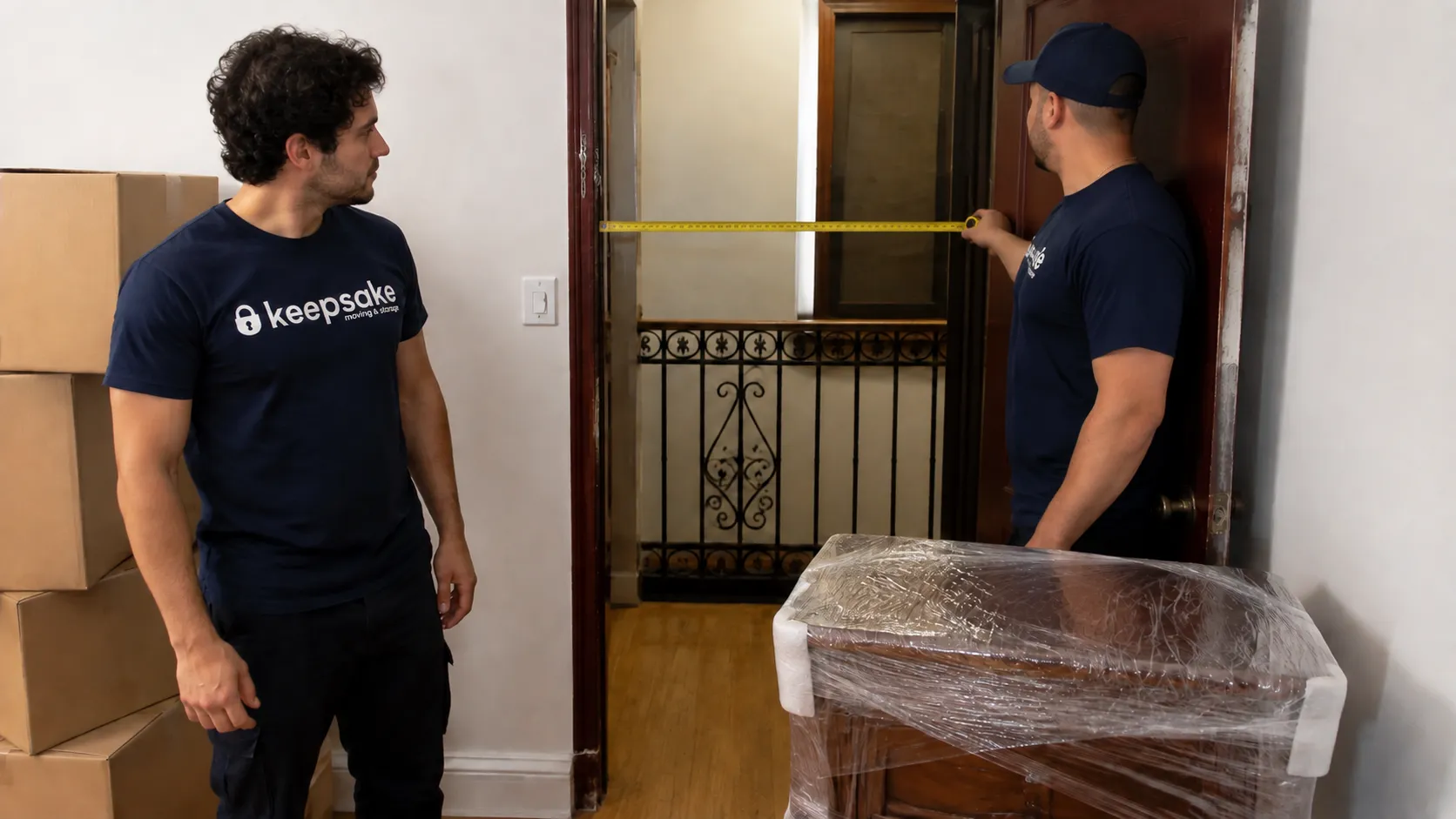
A Park Slope move usually opens on the stoop: a climb to the parlor floor, then a narrow turn in the hallway where the sofa either fits or comes apart. We measure that turn and work out where the truck parks before the date, so the day itself is mostly carrying.

  1. Move (skipped)
  2. Basics (skipped)
  3. Details (skipped)
  4. Contact (skipped)

Step 1 of 4: Move

Step 1: Move

First, the move itself

Where you're leaving and where you're landing.

Street address is best, but a neighborhood works.

Even just the borough is fine if you're not sure yet.

The streets running from Prospect Park West down to 4th Avenue are brownstone rows, whether they’re numbered or named like Carroll Street and Montgomery Place, and most of the apartments in them sit above a high stoop. A parlor floor puts a dozen stone steps between the sidewalk and your front door, so we lay a runner over the treads and pad the railing before anything heavy comes out, because brownstone chips. Behind the stoop, the garden-floor door sits under the steps with a low header, so anything tall goes in on its side or comes through the parlor instead.

Park Slope earns its name on the way down to 4th Avenue, and the hill is part of where the truck ends up parking, because a loaded dolly wants the flattest run to the tailgate. Up toward Grand Army Plaza and along 4th Avenue you’re in elevator buildings with a managing agent, so there’s a certificate of insurance to file with their office and an elevator to pad and book for a set window. Those prewar lobbies have a vestibule and a second inner door, so a wide piece gets turned twice before it even reaches the elevator.

Plenty of these moves are a whole home rather than one floor: the parlor and garden levels going out together, with a basement nobody has properly opened in years. We can pack the kitchen and the bookshelves in the days beforehand, then carry out what’s going and clear what’s not, with anything still usable dropped at a donation or recycling point instead of a landfill. That way the last hour of your last day isn’t you, a borrowed van and a pile on the sidewalk.

Tell us where you’re moving from and to, whether each end has a stoop or an elevator, and roughly what’s going on the truck. We’ll work out a flat price and send it over, with the stoop climb and the parking already in it.

Moving in Park Slope, in short

ZIP codes

11215 · 11217

What you're moving out of

  • Brownstone rows on the numbered and named streets between Prospect Park West and 4th Avenue
  • Parlor and garden floors reached by a high stoop
  • Prewar elevator co-ops toward Grand Army Plaza
  • Newer elevator condos along 4th Avenue
  • Apartments over the shops on 5th and 7th Avenues

Streets we know well

  • Prospect Park
  • Prospect Park West
  • Grand Army Plaza
  • Carroll Street
  • 7th Avenue
  • 5th Avenue
  • 4th Avenue

Get your Park Slope quote

Moving somewhere close by?

For the move itself: Local moving in NYC Residential moving Packing services Furniture movers Storage Junk removal All of Brooklyn

Park Slope moving questions, answered

Parking on my block looks impossible. Where does the truck actually go?

The residential streets on both sides of you are alternate-side, so we come in behind the sweeper on your day, when that side has just cleared, and take the space nearest your stoop. If you live over a shop on 5th or 7th Avenue the curb is working all day with deliveries, and we load from the side street around the corner instead. The school run at PS 321 slows the block on 7th Avenue either side of the morning bell, so the truck is either parked before it or arriving after it.

I'm on the parlor floor, up the stoop. Is that going to be a problem?

No, a parlor floor over a stoop is an ordinary carry. The tight spot is rarely the steps. It's the hallway inside, where the run from the front door narrows at the first turn. We measure that turn against your widest piece beforehand, and if an armoire won't swing around it, the door comes off its hinges for the extra inches rather than the frame taking the strain.

Will my building ask for a certificate of insurance?

The elevator condos along 4th Avenue almost always do, and so do the prewar co-ops up toward Grand Army Plaza, where the board sets what the certificate has to name. Send us their requirements and the managing agent's contact and we'll file the certificate with their office well before the truck arrives. A brownstone with the owner living downstairs usually has nobody to file one with.

It's a garden-floor one-bedroom, not a whole house. Do you take jobs that small?

Yes. A garden floor near 5th Avenue heading a few blocks up the hill gets the same pads and the same wrapped mattress as a four-bedroom, and the price is worked out the same way, off what's actually going. Give us the two addresses and a room list, and we price the job in front of us rather than half a house.

How do you work out the price?

From your room list and what each address throws at us, a stoop at this end and either an elevator or another stoop at the other. Once we send that price it's guaranteed, so a stoop of twelve steps instead of six doesn't change it, and no clock runs while an armoire comes down the hall turn.

Our closing date and our move-out date don't line up. Can you hold everything?

Yes. Closings slip, and in a brownstone sale the move-in date usually slips with them, so we load you out on the day you have to be out and keep your things until the keys are properly in your hand. Tell us both dates when you ask for the price, even if the second one is still a guess, and the storage leg is in the quote from the start.

Moving in Park Slope? The quote is the easy part.

Tell us the building, the floor and what's coming with you. We'll plan the rest.

Leaving New York

Heading to another state?

We cover that route. Tell us what’s moving and we’ll send you a flat quote for the whole road, door to door.